Five Golden Rules for Creating a Well-Designed Flowerbed
Spring is here, and it’s the perfect time to think about your landscaping. If you’re looking to add a touch of greenery and color to your outdoor space, creating a flowerbed is a great idea—but how do you make sure to achieve the beautiful, modern look you’re going for? In this post, we share our designers’ five golden rules for creating a well-designed flowerbed that will enhance your landscaping and add beauty to your space.
1- Choose a good color scheme
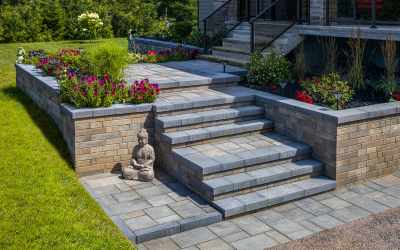
Choosing the right colors for your plants is key to creating a harmonious design. With so many colors available, it is easy to get carried away and try to combine all your favorites in one flowerbed. Still, we recommend that you choose one accent color and two complementary colors for a maximum of three colors in your layout. An even better option is to go for one main accent color and mix it with different tones. For example, you could pair a light-yellow flower, a bright-yellow flower, and a shrub with yellow-green foliage to create a warm tone design. The trick is to avoid mixing warm and cool tones. By doing so, you will create a harmonious and modern landscaping.
2- Play with textures and contrasts
To add diversity and visual appeal to your flowerbed, consider choosing plants with different types of foliage. Combining fleshy foliage with tapered foliage, for example, can create an interesting texture. You can also play with foliage colors to create contrasts. For instance, reddish or pinkish leaves can make dark green leaves stand out. Using contrasting colors and different textures will definitely highlight the beauty of your plants.
3- Repeat plants for better harmony
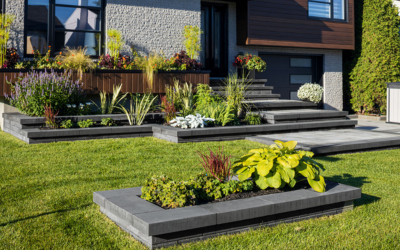
The repetition of plants is the best way to create balance and harmony in your flowerbed. We recommend planting at least five plants of the same variety to create coherence. Don’t worry—you can still combine several plant varieties in your layout. If you choose to do so, make sure to use several plants of the same species to maintain coherence and harmony throughout your design.
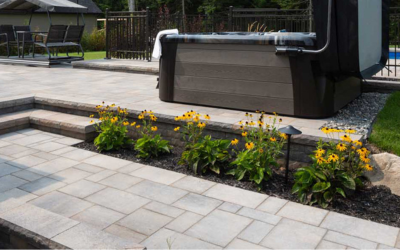
4- Delineate your planting space
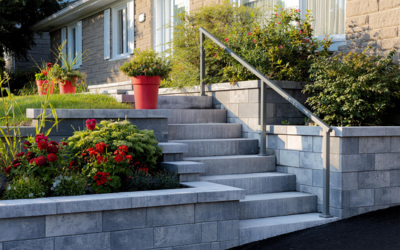
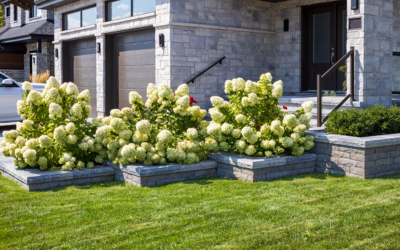
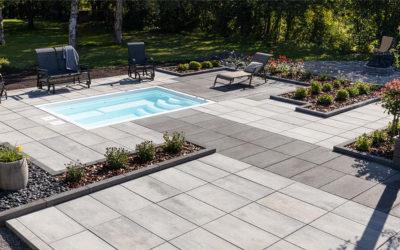
There are many ways to make your flowerbed stand out in your outdoor design. Concrete edging and low walls are two good options to effectively define this planting space. While the low wall gives your flowerbed extra height, the edging can be discreet and blend in with the landscape. Furthermore, with the various concrete products and the many colors available on the market, you can also create planters that will coordinate with the cladding of your house.
5- Add planters for more flexibility
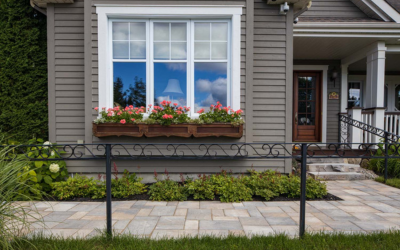
By incorporating hanging planters or flower boxes on your windowsills, you can play with the heights and sizes of your plants, which will bring more dynamism to your landscaping. Flower pots also make it easy to move plants around, adding great flexibility to your design. With a multitude of colors and styles of planters to choose from, you can add diversity to your yard. Also, if you’re looking to keep up with the 2023 trends, you should know that terra cotta planters are very popular.